LED Lighting Upgrades for Bristol Commercial Properties: What's Involved and What You Save
LED lighting upgrades for commercial properties in Bristol have become one of the more common electrical projects over the last few years, and the economics are increasingly clear. Fluorescent tube lighting - still present in a large proportion of Bristol's commercial stock, particularly in the older office and retail units across areas like Redcliffe, Bedminster, and the industrial units around Avonmouth - draws significantly more power than LED equivalents and has much shorter lamp life. The combination of higher energy costs and more frequent lamp replacement makes the ongoing cost of not upgrading reasonably easy to calculate.
What a Commercial LED Upgrade Involves
The scope of an LED upgrade varies depending on what's currently installed. The main scenarios:
Fluorescent tube replacement. The most common starting point. Existing fluorescent fittings can often have the tube replaced with a direct LED tube that runs on the existing ballast (a ballast-compatible LED), or the ballast can be bypassed and a direct-wire LED tube installed, or the whole fitting can be replaced with a new LED panel. Each option has different cost and performance implications - a direct wire installation bypassing the old ballast is generally more energy-efficient and longer-lasting than a ballast-compatible tube, though it requires more installation work.
High bay lighting in warehouses or workshops. Older metal halide or sodium high bay lights have a long warm-up time, poor light quality, and high energy consumption. LED high bays are instant-on, produce better colour rendering (important for quality control environments), and use 50-70% less power for the same light output.
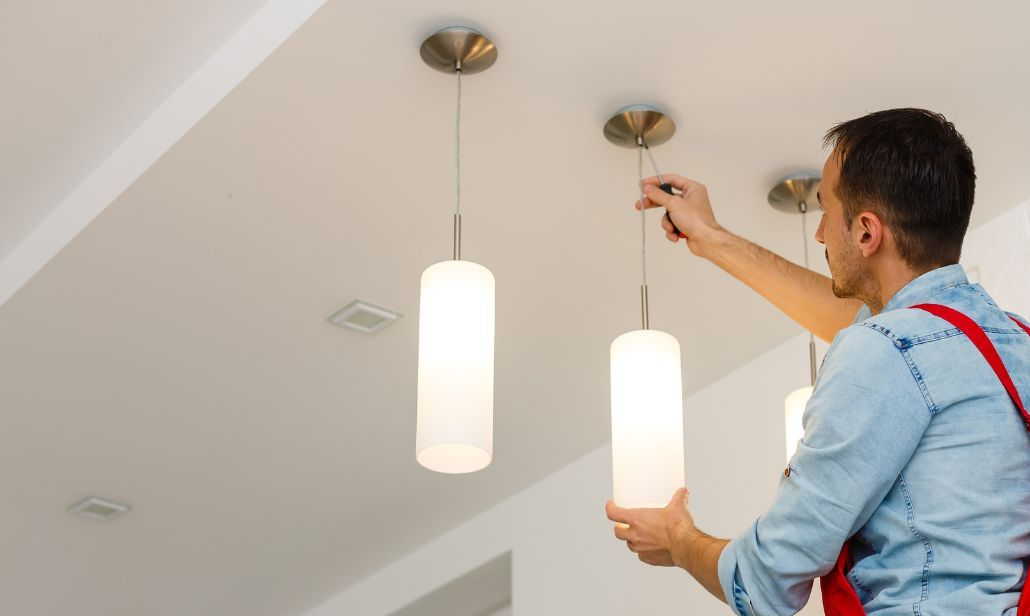
Office and retail LED panels. Modern LED panel lights for suspended ceilings are now direct replacements for the recessed fluorescent fittings that were standard in commercial offices through the 90s and 2000s. They produce better, more even light and use significantly less power.
The Energy Saving Calculation
Bristol Commercial Electricians carries out LED assessments for commercial properties across Bristol, and the calculation is usually straightforward. LED equivalents to fluorescent tubes typically use 40-60% less power. A medium-sized Bristol office with 50 fluorescent fittings running for 10 hours a day might be spending £3,000-4,000 per year on lighting electricity alone. Switching to LED equivalents could reduce that to £1,500-2,000, with a payback period of 1-3 years depending on the cost of the installation.
LED lamp life of 50,000+ hours compared to 8,000-15,000 hours for fluorescent also means significantly less maintenance and lamp replacement cost over the life of the installation.
Grants and Incentives
Some energy efficiency upgrades qualify for Enhanced Capital Allowances or can be funded through schemes targeting commercial energy efficiency. Worth checking what's available at the time of your project - the landscape changes regularly.
Controls and Sensors
An LED upgrade is the ideal time to add occupancy sensors, daylight dimming, or zone controls that further reduce energy consumption. A meeting room that dims automatically when empty, or warehouse lighting that adjusts to daylight levels through roof lights, can add another 20-30% saving on top of the LED efficiency improvement.
We've covered EICR certificates for Bristol commercial properties elsewhere - an LED upgrade is often a good time to combine the two, particularly if the existing installation is getting older and the EICR is due.
FAQ
Q: What's the payback period for a commercial LED upgrade in Bristol?
Typically 1-3 years depending on current lighting type, hours of operation, and energy costs. Properties running older fluorescent or halide lighting for long hours see the fastest payback.
Q: Can LED tubes replace fluorescent tubes without changing the fittings?
Ballast-compatible LED tubes can fit existing fluorescent fittings without modification, but these are generally less efficient than direct-wire installations where the ballast is bypassed. Your electrician should advise on the best approach for your specific fittings.
Q: How long do commercial LED lights last?
Quality commercial LED fittings are typically rated at 50,000+ hours, which at 10 hours a day is over 13 years. This is 3-5 times the life of fluorescent tubes and significantly reduces maintenance and lamp replacement costs.
Q: Do I need building regulations approval for an LED lighting upgrade?
Straightforward like-for-like LED replacements in existing fittings generally don't require formal approval. New circuits, significant rewiring, or changes that affect emergency lighting systems do fall under building regulations and Part P. Your electrician will advise on what certification is needed.
Ready to work with Bristol Commercial Electricians?
Let's connect! We’re here to help.
Send us a message and we’ll be in touch.
Or give us a call today at 0117 427 8971
Agency Contact Form
More Marketing Tips, Tricks & Tools

EICR Certificates for Bristol Commercial Properties: What Landlords and Business Owners Need to Know